

Knee Pain Physical Therapy New York NY
Physical Therapy for Knee Pain in New York, NY
Knee pain can affect far more than the joint itself. A painful or stiff knee may change how you walk, climb stairs, stand, exercise, or move through your daily routine. Even activities that once felt automatic can begin requiring extra thought, especially when you are unsure which movements are safe or how much activity your knee can comfortably handle.
For some people, symptoms appear after an injury or sudden change in activity. For others, discomfort develops gradually through repetitive demands, weakness, limited mobility, or changes in movement mechanics. Regardless of how symptoms begin, ongoing knee problems can lead people to compensate with other parts of the body, reduce activity, or avoid movements they enjoy.
At Graphene Physical Therapy, the focus is on understanding how your knee functions within the larger movement system and creating a recovery plan around your individual needs. Treatment can be adjusted to your current abilities, daily responsibilities, exercise preferences, and long-term goals, helping you work toward better movement and greater confidence in New York, NY.
Comprehensive Knee Pain Care in New York, NY
Why Knee Symptoms Can Affect More Than the Knee
The knee works as part of a connected movement system. The hip and ankle contribute to how the leg absorbs force, maintains balance, and controls movement during walking, running, squatting, climbing stairs, and other activities.
When one area becomes limited, another part of the body may compensate. Reduced ankle mobility, for example, can influence how the lower leg moves during certain activities. Similarly, reduced hip strength may affect the way the knee is controlled when climbing stairs, running, or single-leg movements.
This does not mean that every knee problem originates somewhere else. Instead, considering the entire movement pattern can give your therapist additional information about how your body is handling everyday demands.
A complete evaluation may consider:
- Joint mobility and flexibility
- Lower-body strength and endurance
- Balance and coordination
- Walking and movement patterns
- Exercise and activity habits
- Previous injuries or procedures
- Work and recreational demands
Looking at these factors can help create a rehabilitation plan that addresses your functional needs rather than focusing only on the location of discomfort.
Common Knee Problems We Help Address
Knee symptoms can develop for many reasons, ranging from sudden injuries to gradual changes associated with activity, repetitive loading, or reduced physical capacity. The appropriate rehabilitation approach depends on the condition, current symptoms, physical abilities, and activities you want to resume.
Common knee concerns may include:
- Knee sprains and strains
- Meniscus-related problems
- Ligament injuries
- Patellofemoral pain
- Tendon irritation
- Arthritis-related stiffness and discomfort
- Running-related knee problems
- Post-surgical limitations
- Reduced strength or mobility following injury
- Balance and movement-control difficulties
Understanding the specific challenges affecting your knee allows treatment to remain focused on meaningful improvements in mobility, strength, control, and function.
Understanding What May Influence Knee Discomfort
Knee symptoms can sometimes change depending on how much activity you perform and how quickly your activity level increases. Someone who begins running after months of limited exercise may place unfamiliar demands on the lower body. Similarly, increasing resistance, distance, speed, or training frequency too quickly can challenge tissues that have not yet adapted.
Previous injuries can also influence movement. Even after an injury is recovered, you may continue favoring one side or avoiding certain movements without realizing it. Over time, these habits may affect strength, coordination, and confidence.
Other factors worth considering include:
- Sudden increases in exercise volume
- Repetitive movements
- Reduced lower-body strength
- Limited mobility
- Changes in training routines
- Previous knee injuries
- Extended periods of inactivity
- Demanding occupational activities
These factors do not automatically identify the cause of symptoms. They simply provide useful context that can help your therapist understand how your knee responds to the demands of your daily life.
Building Strength for Everyday Movement
Strength plays an important role in how the knee handles everyday activities. The muscles surrounding the knee, hip, ankle, and trunk all contribute to controlled movement and stability.
Rehabilitation may begin with manageable strengthening exercises and gradually progress as your abilities improve. Depending on your goals, your program may address the quadriceps, hamstrings, glutes, calves, and core.
The purpose is not to perform as many exercises as possible. Each exercise should have a clear purpose connected to your recovery.
Improved lower-body strength may help you:
- Stand from a chair more comfortably
- Climb stairs with greater control
- Walk for longer periods
- Improve balance
- Perform squatting movements
- Return to recreational exercise
- Manage physical work demands
As your capacity improves, exercises can become progressively more challenging so that your rehabilitation continues to reflect the demands of your lifestyle.
Restoring Mobility Without Rushing Progress
Stiffness can make everyday movement feel restricted and may influence how comfortably you walk, exercise, or perform household tasks. Improving mobility can therefore be an important part of rehabilitation.
Depending on your condition, treatment may incorporate hands-on techniques, mobility exercises, stretching, and active movement. Your therapist can determine which approaches are appropriate based on your current limitations and response to treatment.
Progress should remain gradual. Trying to force movement beyond what your body is currently prepared to tolerate may not support productive recovery. Instead, rehabilitation can focus on steadily improving comfortable movement while developing the strength and control needed to use that mobility effectively.
Improving Balance and Movement Control
Strength is only one part of effective knee function. Your ability to control the leg during movement is also important when walking, stepping down stairs, changing direction, or performing single-leg activities.
Balance and movement exercises can help improve coordination and awareness while teaching your body to manage varied positions and physical demands.
As your abilities improve, treatment may progress toward:
- Single-leg movements
- Step-down exercises
- Controlled landing activities
- Direction changes
- Progressive resistance exercises
- Activity-specific movement patterns
The appropriate exercises depend on your current stage of recovery. The goal is to create meaningful challenges without rushing you into movements your body is not yet prepared to perform.
What Our Knee Treatment Addresses
Knee symptoms can develop from overuse, injury, post-surgical limitations, or compensation patterns elsewhere in the body. We design our treatment plans to provide lasting improvement through knee pain-specific physical therapy. We often address the following:
- Meniscus-related discomfort
- Ligament recovery and stability training
- Post-operative rehabilitation
- Weakness, stiffness, and movement compensation
One-on-One Care With Clear Progress
Returning to Exercise With a Clear Plan
One of the biggest concerns after a knee problem is knowing when to resume exercise. Stopping activity completely may not always be necessary, but immediately returning to your previous intensity may also place unnecessary demands on the recovering body.
A gradual progression allows your body time to adapt. Someone returning to running may begin with walking and controlled intervals before gradually increasing distance or speed. Someone returning to strength training may begin with lighter resistance and progressively rebuild loading capacity.
Your return-to-activity plan may consider:
- Current symptoms
- Strength and mobility
- Exercise history
- Previous injuries
- Training frequency
- Type of activity
- Desired activity level
This approach can make returning to exercise more structured and help you understand how your body responds as demands increase.
What Happens Between Appointments Matters
Rehabilitation does not happen only during scheduled appointments. What you do throughout the week can influence how well you maintain and build upon the progress developed during treatment.
Your therapist may recommend exercises, mobility work, activity modifications, or other strategies that fit realistically into your routine. The goal is not to overwhelm you with complicated instructions. Instead, recommendations should have a clear purpose and support the stage of recovery you are currently working through.
Consistency can also help you recognize changes in your movement. You may notice that certain activities become easier, that you can tolerate more exercise, or that you feel more confident performing movements that previously caused hesitation.
Recovery should ultimately extend beyond the treatment room. As your knee becomes stronger and movement becomes more comfortable, rehabilitation can shift toward the activities and responsibilities you want to manage independently. That may include returning to exercise, walking longer distances, navigating stairs, handling work demands, or participating in recreational activities with greater confidence.
Long-term progress also involves understanding how to manage activity as your abilities change. Learning how to increase physical demands slowly, recognize when additional recovery may be appropriate, and maintain strength and mobility can help make improvements more sustainable. The goal is to provide you with practical strategies that support continued movement beyond your formal therapy sessions.
Built Around Long-Term Function
Building Confidence Through Gradual Progress
Knee problems can create hesitation even after physical symptoms begin improving. You may wonder whether a particular movement will cause symptoms to return or whether your knee is ready for a more demanding activity.
Confidence can develop through experience. Gradually practicing movements and activities in manageable stages allows you to become more familiar with what your body can handle.
Progress may include:
- Walking farther without hesitation
- Using stairs with improved control
- Completing strengthening exercises comfortably
- Returning to recreational activities
- Tolerating longer periods of exercise
- Performing familiar movements with greater confidence
These changes can provide meaningful signs that your physical capacity is improving.
When Professional Care May Be Helpful
Not every episode of knee discomfort requires professional treatment. However, persistent or recurring symptoms may deserve evaluation when they begin interfering with your normal activities.
Professional guidance may be helpful when:
- Symptoms continue or repeatedly return
- Knee movement becomes increasingly restricted
- Strength has noticeably decreased
- You are avoiding activities because of discomfort
- Walking or climbing stairs has become difficult
- Exercise is no longer comfortable
- Symptoms developed following an injury
- You are uncertain about returning to physical activity
- Recovery following surgery is not progressing as expected
An evaluation can help clarify your current limitations and determine whether rehabilitation is appropriate. It can also help identify situations where additional medical evaluation may be necessary.
Why Individualized Care Matters
No two knee recovery journeys are exactly alike. Two people with similar symptoms may have very different activity levels, movement patterns, medical histories, responsibilities, and goals.
Individualized treatment allows these differences to be considered throughout rehabilitation. Your therapist can monitor your response to specific exercises, adjust the level of challenge, and help you progress at an appropriate pace.
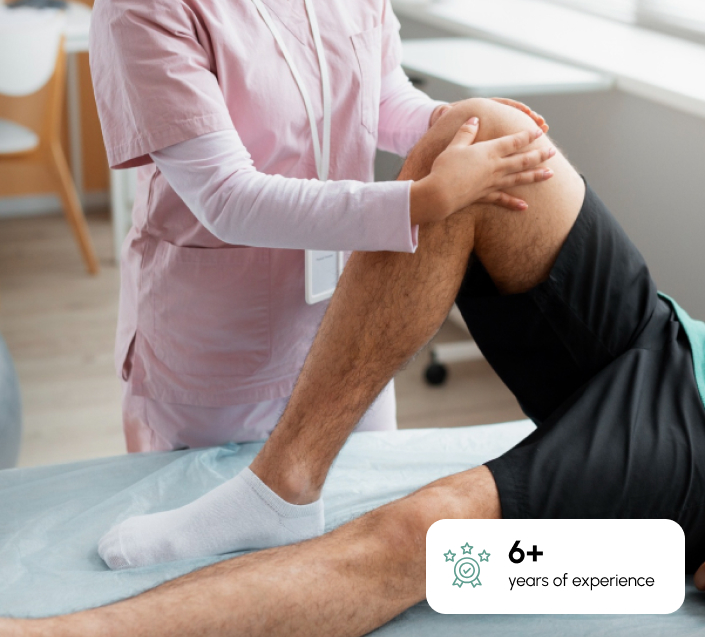
At Graphene Physical Therapy, one-on-one attention keeps each session focused on your needs. Manual therapy, corrective exercise, functional training, and movement education can be incorporated when appropriate to support your recovery and help you understand how to manage your knee beyond the clinic.
Take the Next Step Toward Better Knee Function
You do not have to let knee discomfort determine which activities you can enjoy. With appropriate guidance and a progression suited to your abilities, rehabilitation can help you work toward stronger, more confident movement.
Physical therapy for knee pain can provide a structured approach for people who want to understand their limitations and improve their movement. At Graphene Physical Therapy, treatment is shaped around your individual condition, lifestyle, and goals rather than a one-size-fits-all routine.
For individuals seeking care in New York, NY, the process can begin with understanding how your knee currently functions and identifying practical steps toward the activities that matter most to you.
If knee pain is limiting your movement, exercise, or everyday activities, Graphene Physical Therapy can help you take the next step. Call 646-588-0082, text 347-706-3503, or schedule your appointment online to begin individualized care in New York, NY.